
Sunken fire pit cost in Central Florida spans a wide range, and the design you pick is what moves the number most. This guide covers what a sunken fire pit costs, the design ideas worth spending on around a pool deck, gas versus wood, and how to keep it safe and dry. For how a sunken fire pit is engineered and drained, see our full design and drainage guide.
What Is a Sunken Fire Pit?
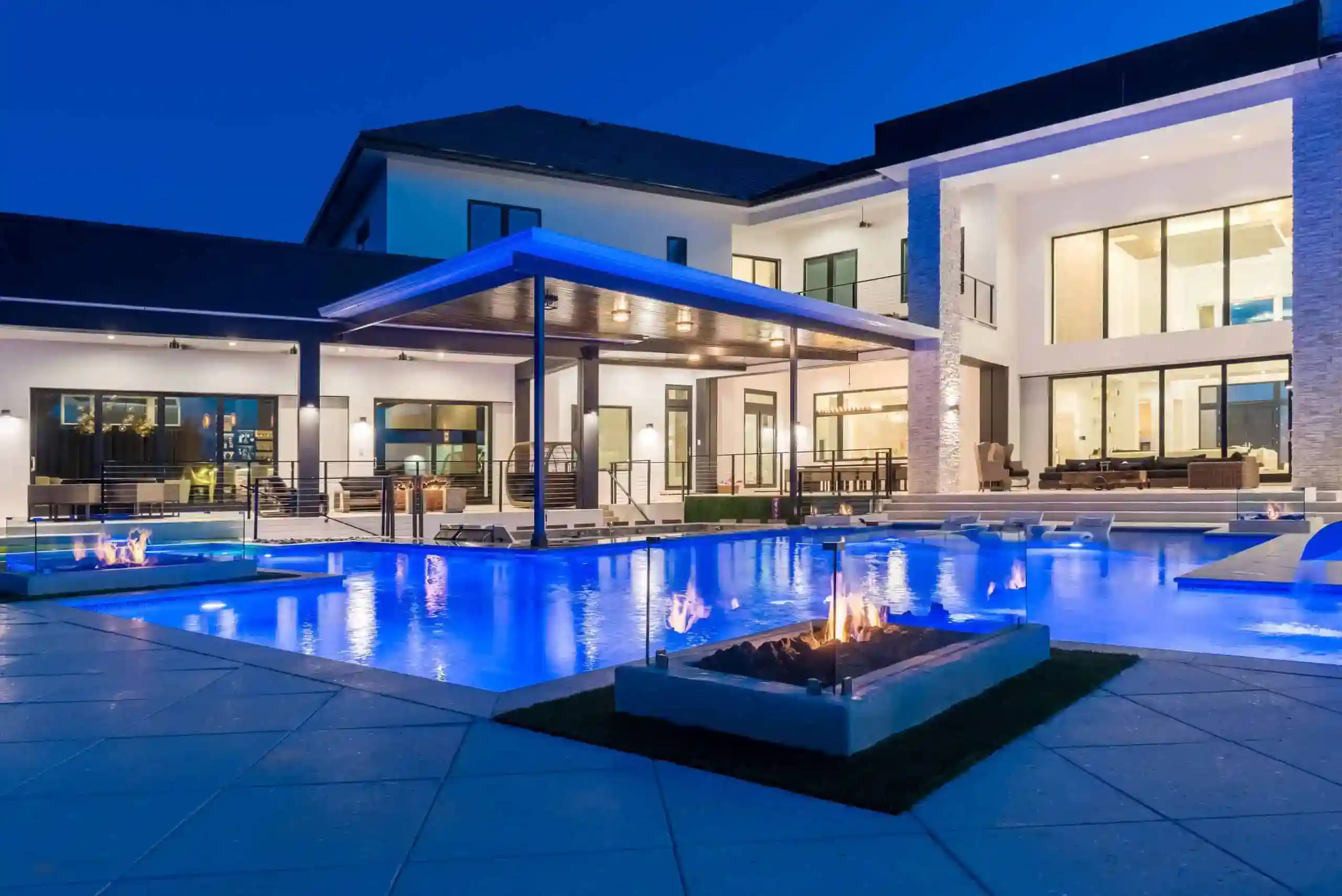
A sunken fire pit is a fire feature set below grade with built in seating around it, so the flame sits at ground level and the area feels like an outdoor room. It is built into the deck or patio, not set on top.
The sunken design is what separates it from a store bought bowl. Because the seating drops down around the fire, the space feels enclosed and intimate, and sightlines stay low so nothing blocks the view across the yard or the pool. Most are round or square, ringed by a bench or a low wall, and finished to match the surrounding hardscape so the whole area reads as one design rather than an add on.
How Much Does a Sunken Fire Pit Cost?
A sunken fire pit is priced by size, materials, fuel type, and how much surrounding hardscape it needs. A simple wood burning pit with a basic seating ring sits at the low end. A gas fed pit with custom stone, integrated bench seating, and matching decking sits well above it. The feature rarely lives alone, so the honest way to budget is to price it with the patio or pool project around it. Our guide to what a pool and spa costs in Central Florida shows how features like this fold into a full backyard build.
| Cost driver | Why it moves the price |
|---|---|
| Size and seating | A larger ring means more excavation, more wall, and more finish |
| Fuel type | Gas needs a line, a burner, and ignition; wood needs only the pit |
| Materials | Custom stone and matching pavers cost more than a standard kit |
| Drainage and site | A high water table or poor runoff adds drainage work below grade |
As a rough frame, a modest wood burning sunken pit is the most affordable path, a mid range gas pit with quality stone sits in the middle, and a large custom pit with integrated bench seating and premium finish is the top of the range. Where your project lands depends on the size, the fuel, and how much surrounding deck it ties into. The right way to get a real number is a design consultation that prices the pit inside the full backyard plan, so nothing surprises you once the work starts.
How Is a Sunken Fire Pit Built?
Building a sunken fire pit is real hardscape construction, not a weekend kit. The crew excavates the recessed area, sets a stable compacted base, and builds the retaining structure that holds the surrounding seating. The fire vessel itself is a fire rated pit or a gas burner pan, set with the correct clearances and non combustible surround. Then the seating, decking, and finish are laid so the sunken area ties into the rest of the patio. Because it involves structure, drainage, and often a gas line, the outdoor living standards published by the Pool and Hot Tub Alliance guide how the feature is built to last. It is one of the fire builds covered under our fire features work.
Timeline follows the scope. A standalone pit on an accessible patio is a short build, while a pit designed into a new pool deck runs on the pool schedule. Permitting depends on the gas work and the structure, and a builder who handles engineering in house keeps that moving rather than waiting on a subcontractor.
How Do You Handle Drainage in a Sunken Fire Pit?
Drainage is the single most important detail in a sunken fire pit, and it is the one homeowners miss. A recessed space is a low point, so rain and runoff collect there unless it is engineered to drain. In much of Central Florida the water table sits high, which the Florida Department of Environmental Protection notes across the region, so the design has to move water away rather than trap it. A proper build uses a drainage layer at the base, a channel or a French drain tied to a discharge point, and a permeable or sloped surround so water never pools around the seating. Done right, the pit stays dry and usable after a storm. Done wrong, it becomes a basin that holds water and stains. For the full engineering detail, see our guide to sunken fire pit design and drainage.
Gas or Wood: Which Sunken Fire Pit Is Right for You?
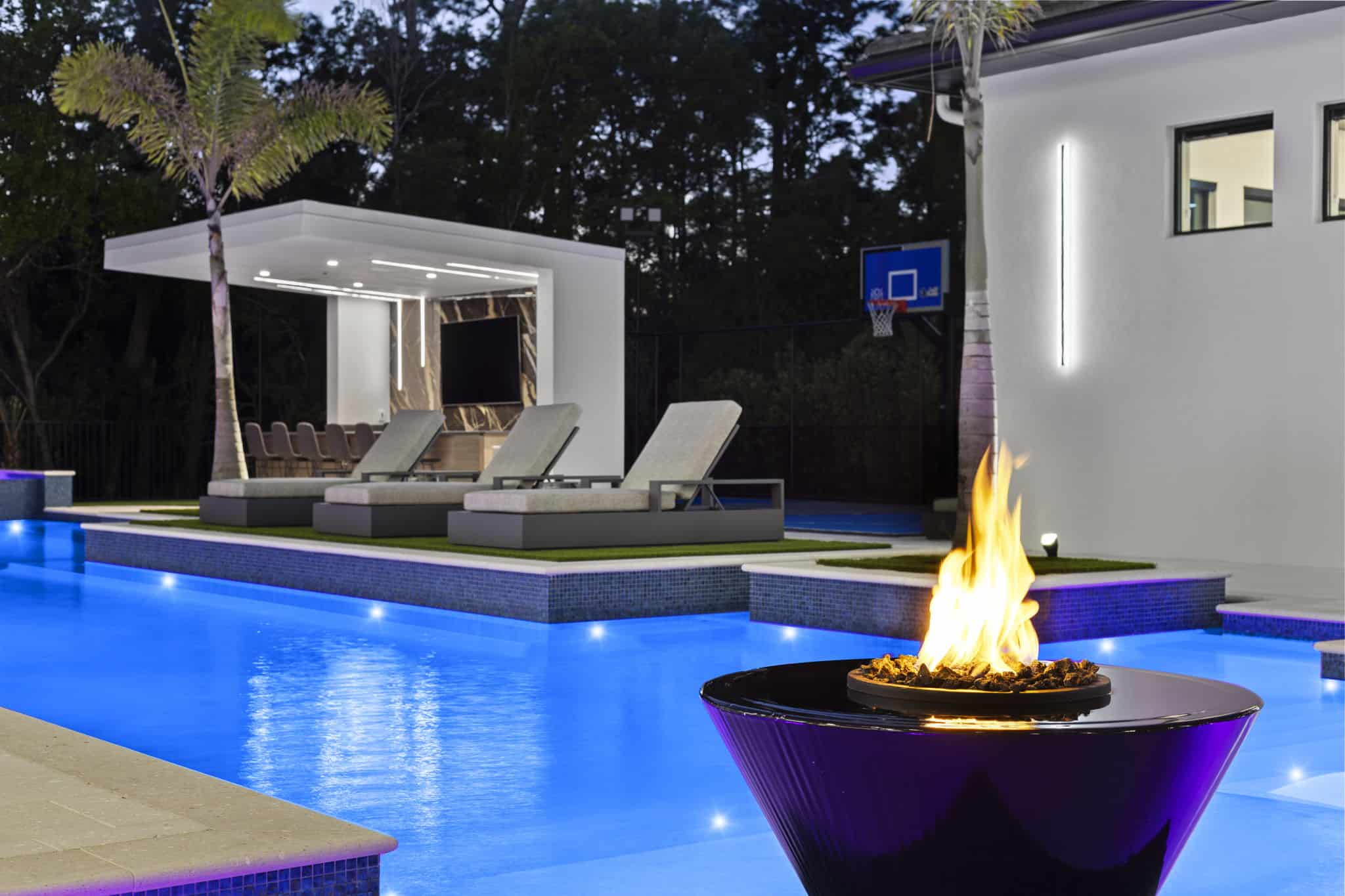
Gas and wood each suit a different owner. A gas sunken fire pit lights instantly, holds a clean and steady flame, and shuts off with a switch, which is why most luxury backyards choose it. It needs a gas line and a burner, so it costs more up front, but it is far easier to live with day to day. A wood burning sunken fire pit costs less to build and gives the crackle and smell some owners want, at the price of smoke, ash, and cleanup. If the pit sits close to the house, the pool, or a screen enclosure, gas is usually the better fit because it makes no embers.
Is a Sunken Fire Pit Safe?
A sunken fire pit is safe when it is built with the right clearances and materials. The fire needs non combustible surfaces around it, adequate distance from the house, fences, and any screen enclosure, and for gas, proper ventilation so fuel never collects in the recess. Fire safety authorities such as the National Fire Protection Association set clearance guidance that a professional build follows. The sunken shape actually helps in one way, since it lowers the flame and shelters it from wind, but that same enclosure is exactly why drainage and ventilation have to be engineered rather than guessed.
Sunken Fire Pit Ideas for a Pool Deck
Next to a pool, a sunken fire pit becomes the second gathering point after the water, and the two can be designed to talk to each other. A popular pairing sets the pit across from a raised spa or a water feature so fire and water frame the deck, an effect that works beautifully with our water features. Others tuck the pit into a corner of the deck with a low bench that doubles as a retaining wall. The key is designing the pit with the pool from the start, which is what a custom luxury pool design and construction process is built to do, so the fire pit, the deck, and the pool read as one backyard rather than three separate projects.
Lighting ties it together after dark. Low voltage fixtures along the steps and the seating wall make the sunken area safe to move through and give the fire a warm frame, and the same automation that runs the pool can bring the pit up with a tap. Small touches like built in storage for wood or a discreet gas key finish the space so it feels designed, not assembled.
How Do You Maintain a Sunken Fire Pit?
Upkeep on a sunken fire pit is light, but it is not zero. Keep the drainage clear so leaves and debris never block the outlet, since a clogged drain is the fastest way to turn the recess into a puddle. Sweep out ash after a wood burn, and for a gas pit, check the burner and the lava rock or glass once a season and cover it before a storm. Wipe the seating and reseal natural stone on the same schedule as the rest of your hardscape. A pit built with the right base, drainage, and materials holds up for years with only this seasonal attention, which is another reason the quality of the original build matters more than any single feature choice.
Frequently Asked Questions
Do Sunken Fire Pits Fill With Water When It Rains?
Only if drainage was skipped. A properly built sunken fire pit has a drainage layer and a channel or French drain that carries water to a discharge point, so it stays dry after a storm. In high water table areas of Central Florida, that is engineered in from the start.
How Deep Is a Sunken Fire Pit?
The seating usually drops about one to two feet below the surrounding grade, enough to feel enclosed without feeling like a hole. The exact depth depends on the bench height, the drainage design, and how the space connects to the rest of the patio. A designer sets it so the flame sits at a comfortable eye level for seated guests.
Can You Add a Sunken Fire Pit to an Existing Pool Deck?
Often yes, but it is real construction, since it means cutting into the deck, excavating, and building drainage and structure below grade. On an existing deck the access, the slab, and the drainage all have to be assessed first. It is usually cleaner and cheaper when planned with the pool.
What Is the Best Base for a Sunken Fire Pit?
A compacted gravel or crushed stone base over a drainage layer is the standard, because it carries the structure and lets water move through rather than pooling. The fire vessel then sits on a non combustible surround. The base is where a sunken fire pit is made or broken, so it is not the place to cut corners.
How Far Should a Sunken Fire Pit Be From the Pool?
Far enough for safe clearance and comfortable seating, and close enough that fire and water share the same space. A designer balances the clearances for the fuel type against the flow of the deck, so guests move easily between the pool and the pit. Gas features can usually sit a little closer than wood because they make no embers.
Want a sunken fire pit designed into your backyard? Call (407) 339-5800 or book a design consultation for a real plan and price.