
By Austen Ebenger, owner of Southern Pool Designs. Last updated November 2026.
A Florida pool is wired so that the water, the steel, the deck and every nearby metal part sit at the same electrical potential, with GFCI protection on the equipment and strict clearances around the water. Starting with permits filed on or after December 31, 2026, underwater lights are also capped at low voltage. None of this shows in the finished pool, which is exactly why it is worth understanding before you pick a builder.
Planning a pool? Book a complimentary Site Assessment.
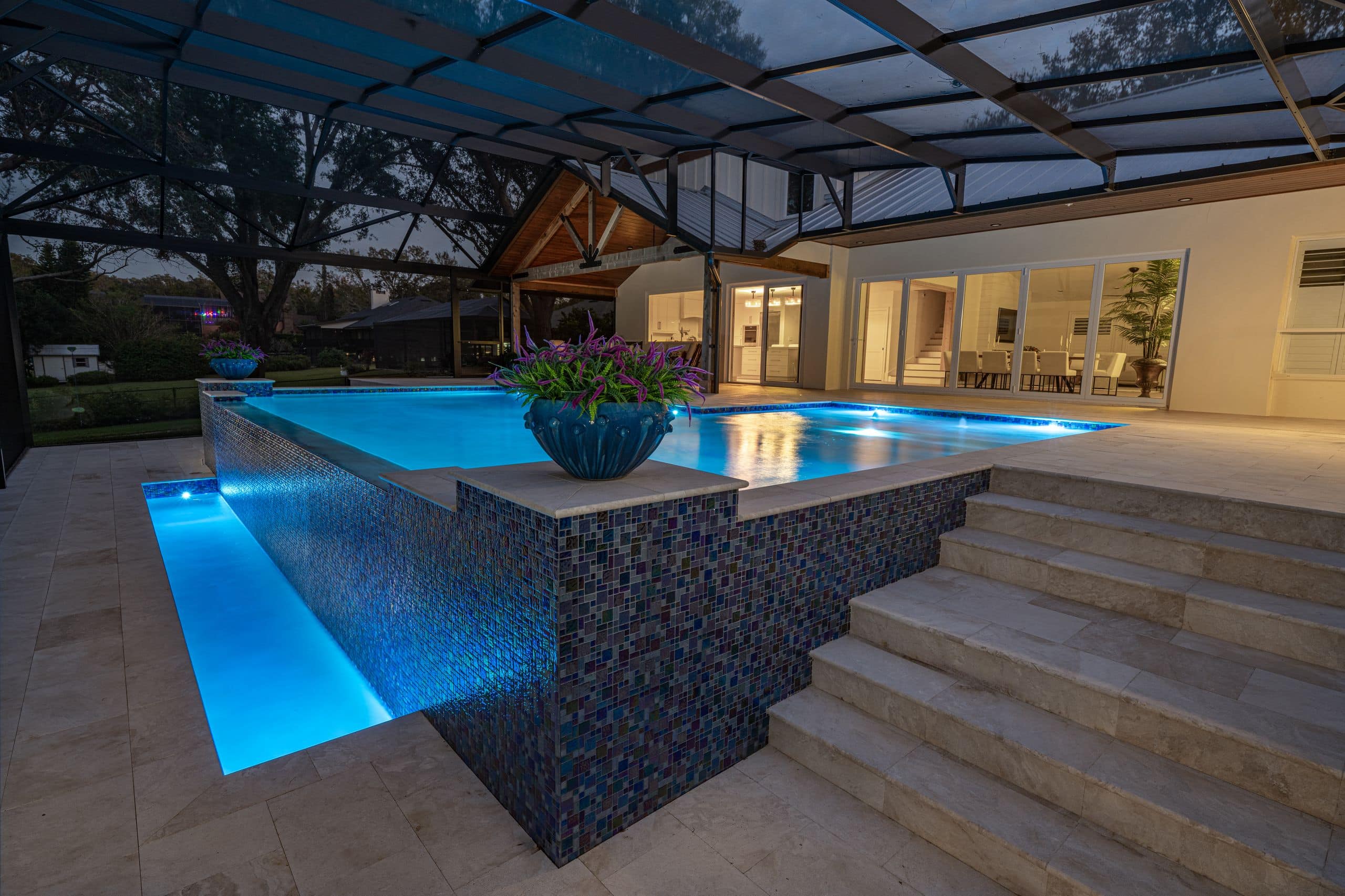
Equipotential Bonding
Bonding connects the pool’s structural steel, perimeter deck, metal fittings and equipment with solid copper so there is no voltage difference for a swimmer to feel. Under Article 680 of the National Electrical Code:
- The bonding conductor is solid copper, No. 8 AWG or larger.
- The pool shell’s reinforcing steel is bonded.
- Perimeter surfaces within 3 feet of the pool are bonded, through deck steel, a copper grid or a copper conductor buried around the pool.
- Metal parts within 5 feet of the pool, along with underwater lights and the pool equipment, are bonded.
Florida’s code keeps an exception allowing single-wire bonding in place of the copper or steel grid otherwise required.
GFCI Protection and Clearances
- Equipment: pool equipment above the low-voltage contact limit is GFCI protected.
- Receptacles: at least one GFCI-protected outlet between 6 and 20 feet from the pool.
- Switches: at least 5 feet from the pool unless separated by a barrier.
- Light fixtures and ceiling fans: within 5 feet of the pool they must be at least 12 feet above it.
- Junction boxes: at least 4 feet from the pool and 4 inches above the deck.
- Overhead power lines: within 10 feet of the pool, at least 22.5 feet of vertical clearance.
These clearances shape the design. Where a cabana, ceiling fan, TV or outdoor kitchen sits near the water is an electrical decision as much as a design one.
Low-Voltage Underwater Lighting
The 9th Edition Florida Building Code limits lights under water, or exposed to water from nozzles, to 30 volts DC or 15 volts AC. Modern LED pool lights fit that easily. For the design side of lighting, see pool lighting benefits and options, and for the full list of 2026 changes, see what changes for Florida pools under the 2026 code.
When It Gets Inspected
Bonding is inspected before concrete is placed, and the final electrical inspection must pass before the pool is filled. Permits and inspections are covered in residential pool permits in Central Florida.
How We Design for It
We place the cabana, fans, outlets, TV and kitchen with the electrical clearances in mind, so nothing gets moved after the design is approved. It is all in the plan set and fixed price from our Design Studio.
Electrical work must be done by a licensed electrician and confirmed with your building department. This article is general information, not electrical advice. Sources: National Electrical Code Article 680 as summarized in FHBA’s Advanced Residential Swimming Pool Course, Analysis of Changes, 9th Edition (2026) FBC Residential.
Frequently Asked Questions
What is pool bonding?
Bonding ties the pool’s steel, metal parts, nearby surfaces and equipment together with copper so they sit at the same electrical potential. It reduces the risk of shock from voltage differences around the water.
Do pool lights need to be low voltage in Florida?
Under the 9th Edition Florida Building Code, effective December 31, 2026, underwater lights and lights exposed to water from nozzles are limited to 30 volts DC or 15 volts AC.
How far do outlets have to be from a pool?
The electrical code calls for at least one GFCI-protected receptacle between 6 and 20 feet from the pool. Your electrician confirms exact placement for your layout.
Is the bonding inspected?
Yes. Bonding is inspected before concrete is placed, and a final electrical inspection is required before the pool is filled.