
By Austen Ebenger, owner of Southern Pool Designs. Last updated November 2026.
There is no single right depth, but many luxury pools in Florida are designed for lounging and play rather than diving, and depth is one of the first decisions because it triggers code requirements and drives cost. Here is how depth affects the rules, the budget and how you will actually use the pool.
Planning a pool? Book a complimentary Site Assessment and we will help you pick a depth that fits how you live.
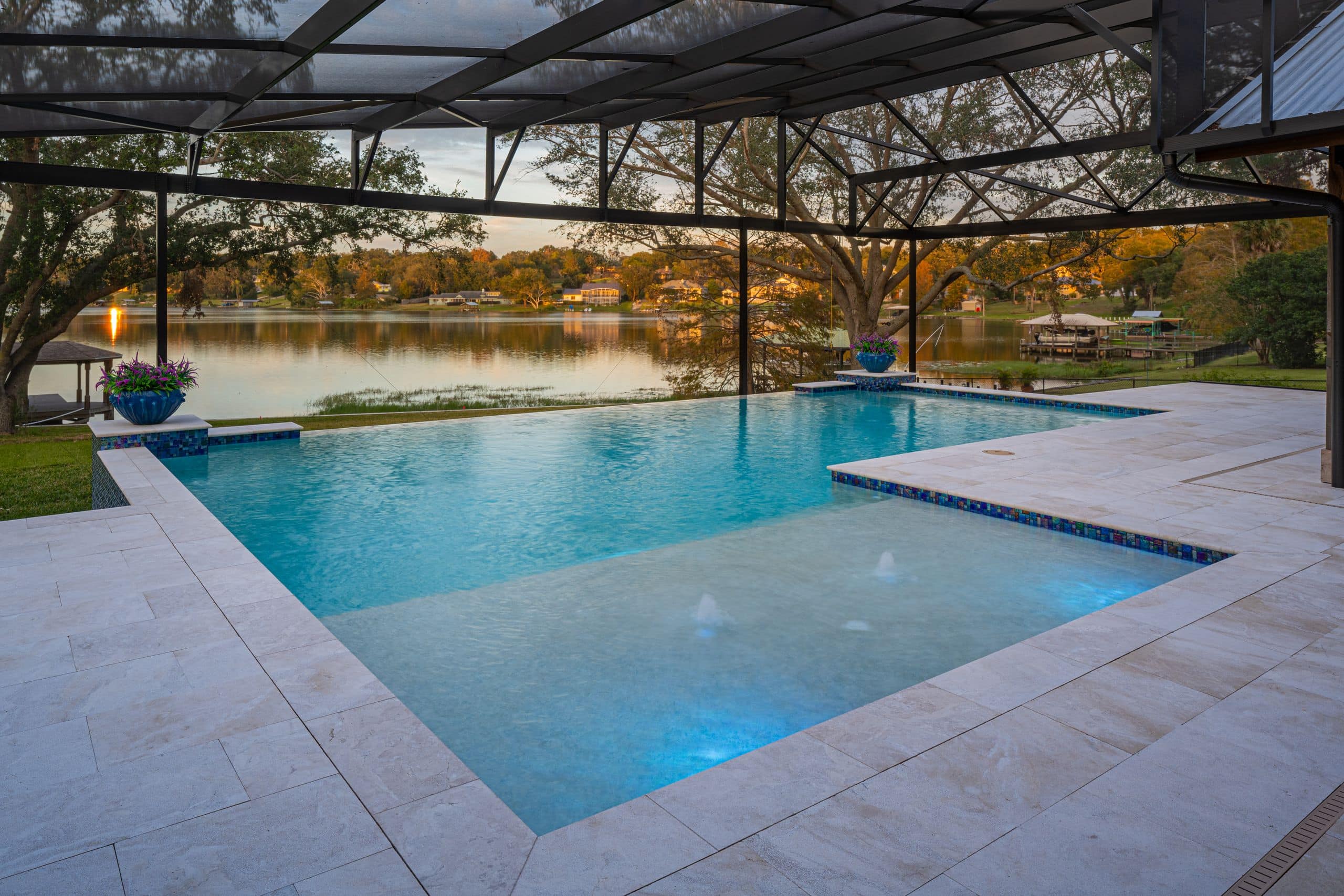
Where Depth Triggers the Rules
- Over 24 inches: it is legally a pool, so barrier and entry and exit rules apply. See Florida pool barrier requirements.
- Over 5 feet: the deep area needs a second way in and out. See does a Florida pool need a ladder in the deep end.
- Diving: a pool with a diving board must meet the minimum diving envelope in the ANSI/APSP/ICC-5 standard, which sets required depths, widths and lengths by pool type and board. Pools where diving is not allowed are not limited in depth by those tables.
Why Most Luxury Pools Skip Diving
A compliant diving envelope needs a large, deep area. Industry guidance puts a mid-range residential type at 6 feet 10 inches deep at the point below the board tip, with longer runs of deep water beyond it. That takes up space you could use for benches, a sun shelf or a swim-up bar, and adds excavation, steel and water. For most families, that space is better spent on lounging, entertaining and play.
Match Depth to How You Will Use It
- Play and entertaining: a sport pool where adults can stand nearly everywhere, often paired with a sun shelf or swim-up bar.
- Swimming laps: a long, consistent depth matters more than a deep end.
- Floating and lounging: moderate depth with plenty of bench seating.
- Cooling off and wellness: a compact plunge pool. See what a plunge pool costs.
What Depth Does to Cost
More depth means more digging, concrete and steel, more water to heat and treat, and in Central Florida, more dewatering where the water table is high. See digging a pool in Florida soil.
How We Design for It
We set depth with you during discovery, then show it in section drawings and renders so you can see where you will stand, sit and swim. Exits, steps and benches are planned around it. It is all in the design book and fixed price from our Design Studio.
Requirements vary by code edition and jurisdiction. Sources: ICC CodeNotes on residential pool entry and exit, selected sections of ANSI/APSP/ICC-5 2011, EngineerFix on diving depths.
Frequently Asked Questions
What is a good depth for a family pool?
Most families get the most use from a play or sport pool where adults can stand nearly everywhere. Staying at 5 feet or less also avoids the deep-end exit requirement.
How deep does a pool need to be for a diving board?
Diving requires the pool to meet a minimum diving envelope under the ANSI/APSP/ICC-5 standard, which sets depths, widths and lengths for each pool type and board. The required depth is usually well over 6 feet at the diving area.
Does a deeper pool cost more?
Generally yes. More depth means more excavation, more concrete and steel, more water to heat and treat, and in high water table areas, more dewatering.
At what depth do Florida pool rules start?
Florida’s pool rules apply to residential pools holding water more than 24 inches deep.