
By Austen Ebenger, owner of Southern Pool Designs. Last updated November 2026.
A new pool screen enclosure in Florida typically runs about $15,000 to $70,000 installed. A simple single-story cage over a modest pool and deck sits at the low end. Tall mansard roofs, panoramic “open view” walls, insulated roof sections and two-story cages that tie into a second-floor balcony push it toward the top. The numbers below come from enclosures we have priced and installed on our own projects in the last two years, not from a national average.
Planning a pool and enclosure together? Book a complimentary Site Assessment and we will price both as one design.
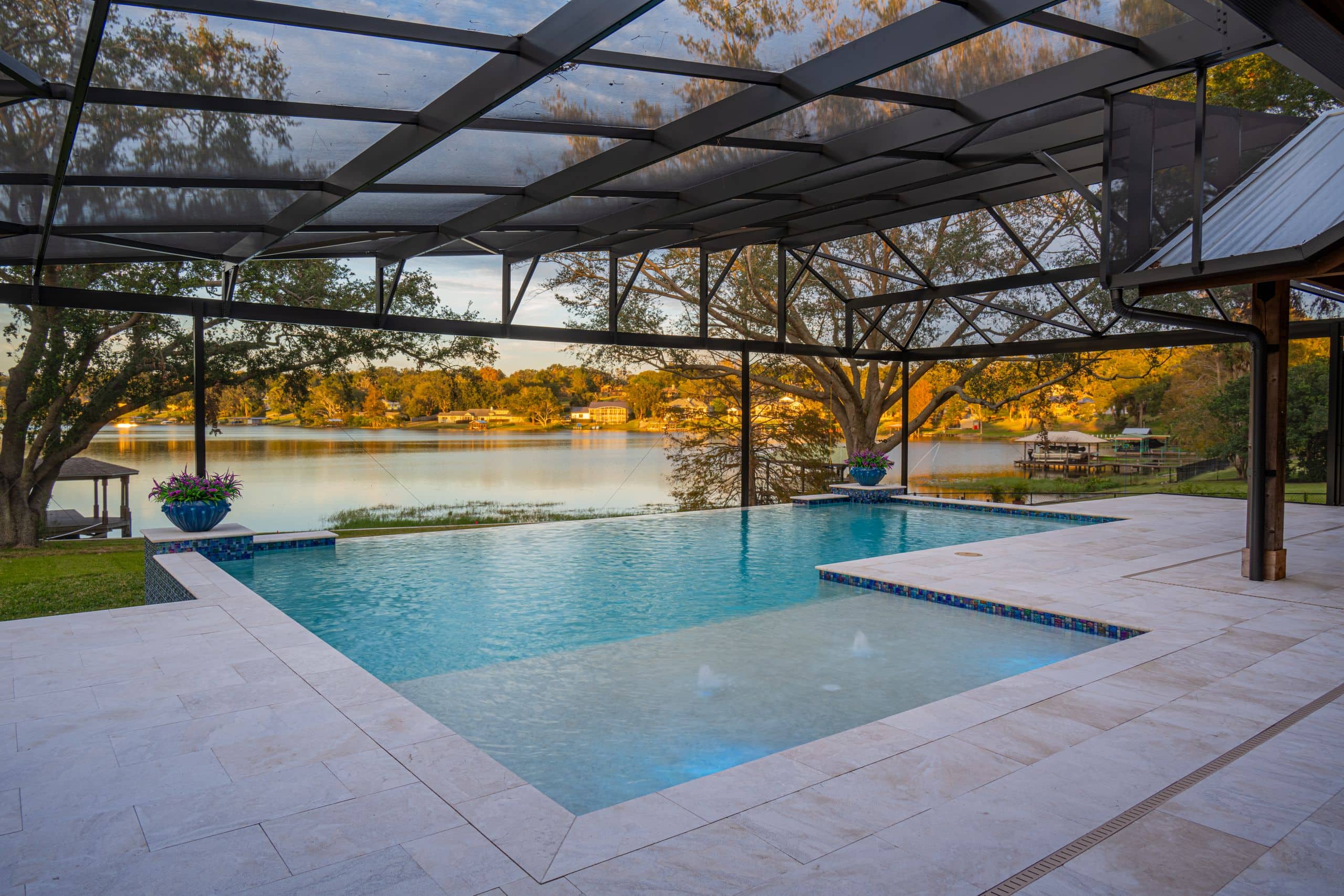
What Drives the Price of a Screen Enclosure?
Every enclosure we build is engineered and permitted for Florida wind loads, so the price follows the structure, not just the square footage of screen. These are the line items that move the number most on real invoices:
- Footprint. The cage covers the pool and the deck. A 36 by 40 foot cage over a 24 by 26 foot pool and its deck is a common size for a mid-sized backyard. Every foot of deck you add adds roof, walls and engineering.
- Wall height. Taller walls mean heavier beams and more bracing. A 12 foot 6 inch mansard wall, which we installed this month in Lake Mary, costs meaningfully more than a standard 8 to 10 foot wall.
- Roof style. Gable, offset gable, hip, mansard and flat (screen roof or solid insulated roof) all price differently. Mansard roofs give the most usable headroom and the cleanest look from inside the house, and they are the most common choice on our luxury projects.
- Panoramic or “open view” walls. Wider spans with fewer vertical members keep the view to a lake or golf course open. They need heavier framing and are a premium line item.
- Screen mesh. Standard mesh, upgraded heavy-duty mesh and specialty no-see-um or privacy mesh all carry different prices per square foot.
- Insulated roof sections and fan beams. A solid insulated roof over part of the cage gives you shade and rain cover, and a fan beam lets you hang a ceiling fan. Both add cost and engineering.
- Gutters and doors. Oversized “super gutters” and extra doors are separate line items. Most cages have at least two doors.
- Footers. The cage sits on a concrete footer or a thickened deck edge. If the deck was not poured with a footer where the cage needs one, a new footer is added and priced by the linear foot.
- Engineering and permits. Sealed engineering drawings and the building permit are part of every enclosure we install, and they are included in our pricing.
Typical Price Ranges by Type
| Enclosure type | What it usually includes | Typical installed range |
|---|---|---|
| Standard single-story cage | Gable, hip or mansard roof at standard wall height over a modest pool and deck, standard mesh, two doors | $15,000 to $30,000 |
| Tall mansard cage | Mansard roof with 12 foot or taller walls, larger footprint, extra gutter and doors | $30,000 to $45,000 |
| Panoramic view cage | Mansard roof with “open view” panoramic walls on two or three sides, upgraded mesh, larger deck coverage | $45,000 to $60,000 |
| Two-story or specialty cage | Two-story cage tied to a second-floor balcony, panoramic walls, insulated roof sections or fan beams, upgraded gutters | $55,000 to $70,000 and up |
These are ranges, not quotes. Your number depends on your footprint, your view, your HOA and how the cage ties into the house.
What Real Enclosures Have Cost on Our Projects
A few recent examples, with client names left out:
- Lake Mary: a mansard roof enclosure with 12 foot 6 inch walls, two doors and extra gutter landed in the tall mansard range in the table above.
- Bella Collina in Montverde: a mansard roof enclosure with panoramic “open view” panels on every side, with engineering and permitting included, came in around $46,000.
- Mount Dora: an expanded two-story enclosure with a three-quarter mansard roof that wrapped the second-story balcony, panoramic walls on all three sides, upgraded mesh, a 7 inch gutter and two doors came in around $56,000.
The pattern is consistent. Height, panoramic walls and a second story move the price far more than the size of the pool does.
Should You Build the Pool and Enclosure Together?
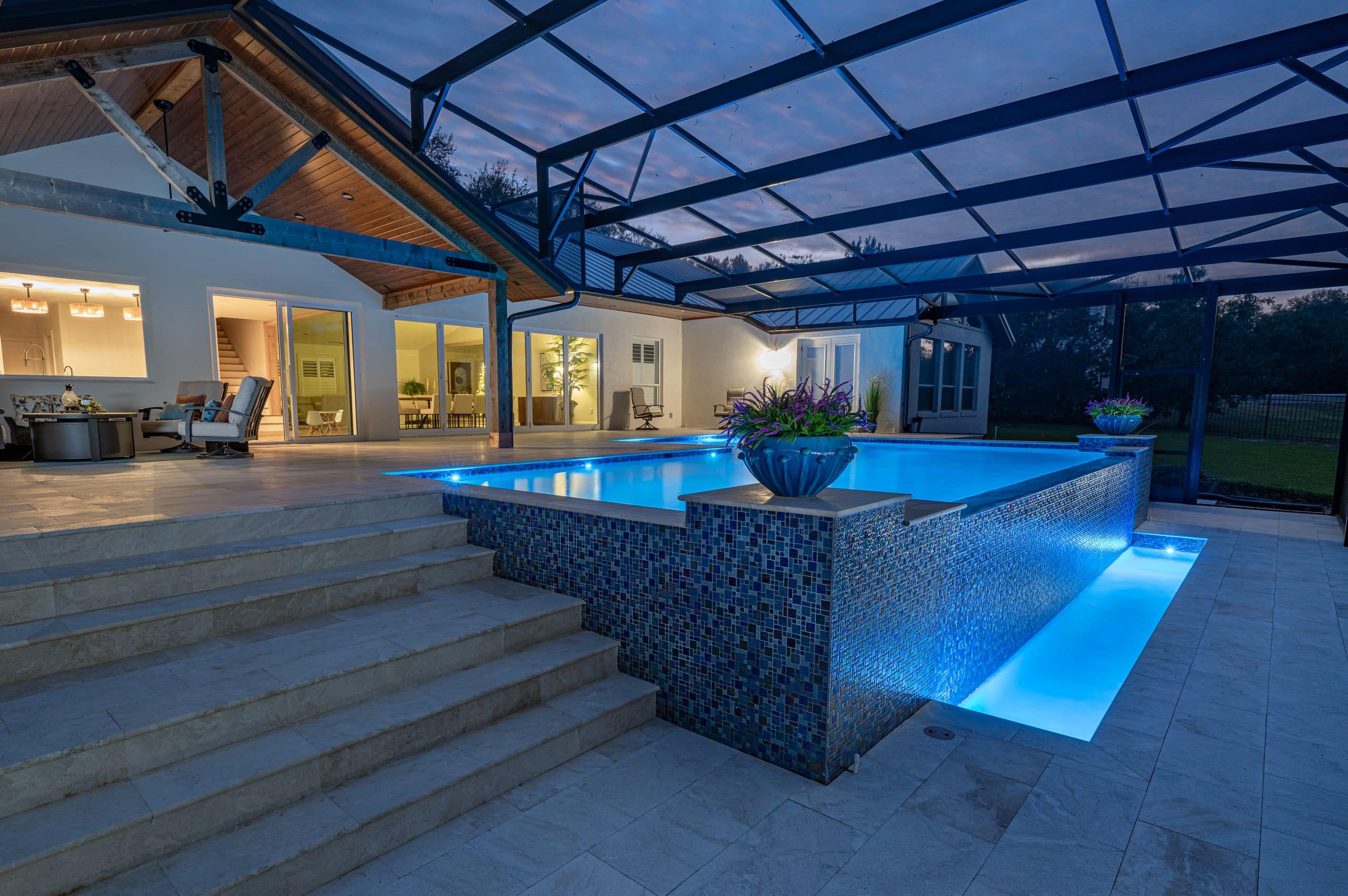
Yes, whenever you can. When we design the pool, deck and enclosure as one project, the footer goes in with the deck, the beams land where they should, and you get one permit path and one schedule. Adding a cage after the deck is poured can mean cutting in a new footer and working around a finished pool.
Changes after signing cost more too. Like most builders, we charge a change order fee when a change affects the structure of the pool, deck or screen after the contract is signed, so it pays to decide on the enclosure during design. If you are building a new home, see our guide to adding a pool to new construction.
Do You Need an Enclosure at All?
Not every backyard needs a full cage. Some clients want an open deck for the view, or use a pergola, pavilion or lanai roof for shade instead. We walk through the tradeoffs in Do You Need a Screen Enclosure for Your Outdoor Pool? and show completed work on our pool screen enclosures page.
One practical point: Florida law requires residential pools to have at least one approved safety feature, such as a barrier, cover or alarm, under Chapter 515 of the Florida Statutes. A properly built enclosure can often act as the barrier, but your permit reviewer makes the final call, so we plan for it during design.
Where an Enclosure Fits in the Total Investment
Our custom pools fall into three tiers: Foundation at $120K to $175K, Signature at $175K to $325K and Monument at $325K to $1M and up. An enclosure is usually priced as a separate line next to the pool, so it is worth asking for it on the same proposal. Want a starting point? Try our pool cost calculator.
Frequently Asked Questions
How much does a pool screen enclosure cost in Florida?
Most new pool screen enclosures in Florida run about $15,000 to $70,000 installed. A standard single-story cage over a modest pool and deck is at the low end. Tall mansard roofs, panoramic walls, insulated roof sections and two-story cages push it toward the top.
What makes a screen enclosure more expensive?
Wall height, roof style, panoramic open-view walls, a second story, insulated roof sections, upgraded mesh, extra doors and gutters, and any new footers. Larger footprints add cost, but height and panoramic framing usually matter more.
Is a mansard roof worth it?
For most luxury backyards, yes. A mansard roof gives more headroom and a cleaner view from inside the house. It costs more than a basic gable or hip roof because it uses taller walls and heavier framing.
Do screen enclosures need a permit in Florida?
Yes. A new enclosure needs a building permit and engineering for Florida wind loads. We include engineering and permitting in our enclosure pricing.
Should I build my pool and screen enclosure at the same time?
When possible, yes. The footer goes in with the deck, the design is coordinated, and you avoid change order fees and rework from adding a cage later.