
By Austen Ebenger, owner of Southern Pool Designs. Last updated November 2026.
Every new Florida pool needs a way to keep young children out, and the barrier you choose shapes the whole backyard. A screen enclosure, a perimeter fence, a removable mesh barrier and a safety cover can all meet the rules. They differ in view, cost, maintenance and how much discipline they ask of you. Here is how we help clients choose.
Planning a pool? Book a complimentary Site Assessment and we will recommend a barrier for your lot.
The Rules Every Option Must Meet
Whatever you choose, the barrier must be at least 4 feet high on the outside, with no gaps or footholds a child could use, and it must sit far enough from the water that a child who gets through cannot fall straight in. We break down every requirement in Florida pool barrier requirements. The choice below is about which method fits your home.
Option 1: Screen Enclosure
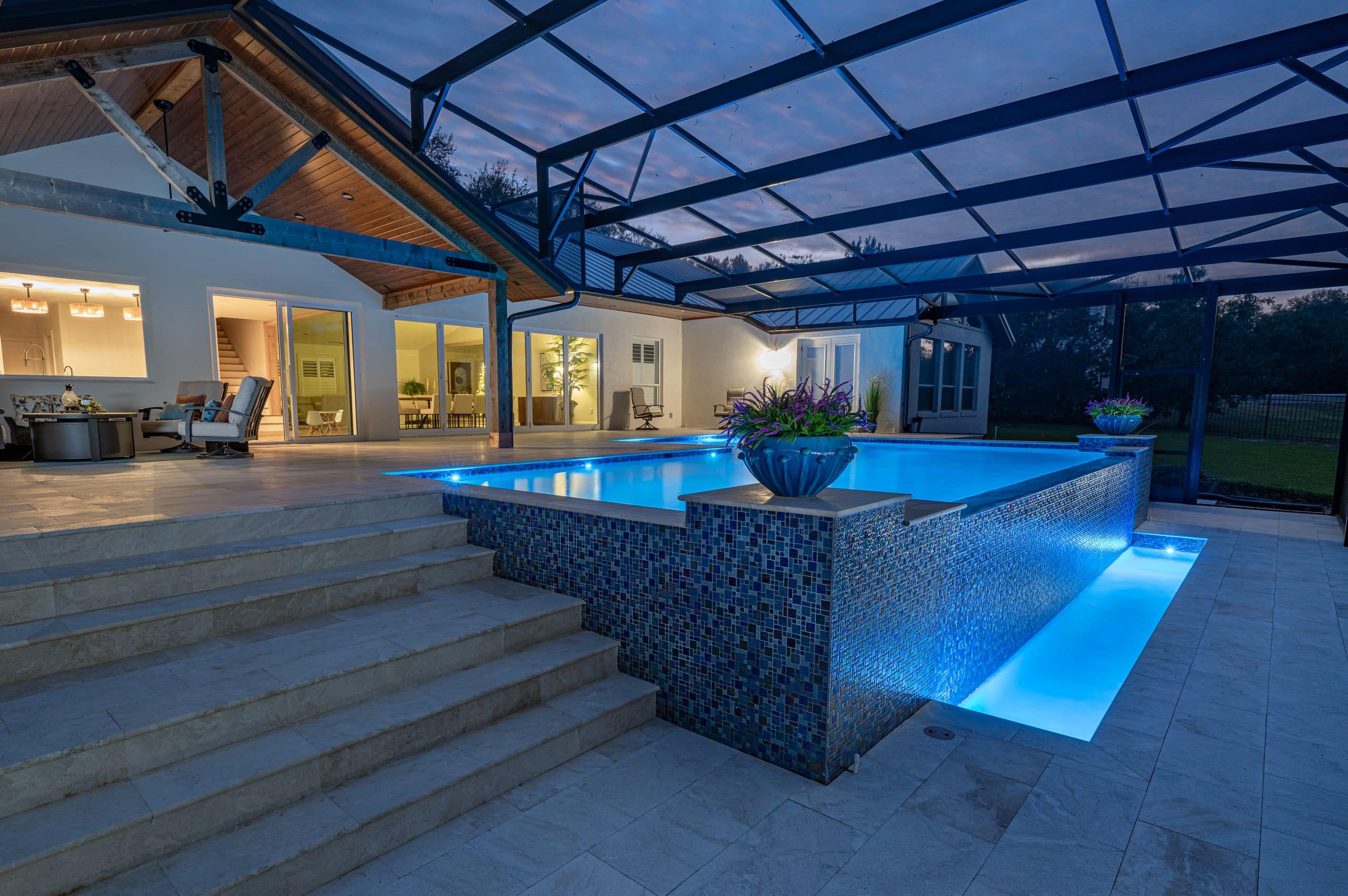
A screen enclosure that meets the barrier requirements can serve as part or all of the barrier, and it is the classic Central Florida pool.
- Best for: families who want bug-free evenings, less debris and a single solution that covers safety and comfort.
- Trade-offs: the frame and screen sit in your view, need upkeep and can be damaged in storms. Setbacks also apply to the enclosure, not just the pool.
- Cost: see what a pool screen enclosure costs in Florida.
Option 2: Perimeter Fence or Wall
A fence or garden wall around the pool area keeps the sky open and works well on lakefront, golf and estate lots.
- Best for: view lots and modern designs where a cage would block the point of the yard.
- Trade-offs: no bug protection, and gates must open outward and be self-closing and self-latching. A yard fence only counts if it sits on the pool’s perimeter and meets every barrier rule.
Option 3: Removable Mesh Barrier
Mesh barriers are allowed when they meet the same requirements and one end can only be removed with tools.
- Best for: families who want protection while children are young, with the option to take it down later.
- Trade-offs: it is visible, and it only works when it is put back up. Some cities add rules for removable barriers.
Option 4: Safety Cover
A safety pool cover listed to ASTM F1346 is a code exception to the barrier.
- Best for: second homes and pools that sit closed for long stretches.
- Trade-offs: it protects only while closed, and freeform pools, rock work and raised spas make covers harder to fit.
Do Not Forget the House Side
On most homes the back of the house is part of the barrier, so every door and window that opens to the pool area needs its own protection. We compare those options in pool door alarms, self-closing doors and pool alarms.
How We Help You Choose
We decide the barrier during design, alongside the view, the screen layout and where the gate and equipment go. It is shown in your renders and included in the fixed construction price from our Design Studio. Not sure which fits your lot? Book a complimentary Site Assessment.
Local jurisdictions can add requirements. Southern Pool Designs confirms the barrier method with the building department on every permit. Sources: Florida Statutes 515.29, Florida Building Code, Residential, Section R4501.17.
Frequently Asked Questions
What is the most common pool barrier in Florida?
In Central Florida, a screen enclosure is the most familiar choice because it serves as the barrier while also keeping out bugs and debris. Open pools with a perimeter fence are common on lakefront and view lots.
Is a removable mesh fence legal in Florida?
Yes, when it meets the barrier requirements, including the 4 foot height, and one end can only be removed with tools. Some cities add their own rules for removable barriers, so check locally.
Can I use a safety cover instead of a fence?
Florida recognizes a safety pool cover listed to ASTM F1346 as an exception to the barrier. It only protects the pool when it is closed, so it depends on daily discipline.
Does the house count as part of the barrier?
It can. When the back of the home forms one side, every door and window opening to the pool area needs protection, such as an exit alarm or a self-closing, self-latching door.