
By Austen Ebenger, owner of Southern Pool Designs. Last updated November 2026.
In Florida, any residential pool that holds water more than 24 inches deep must be protected before it can pass final inspection, and the standard barrier is at least 4 feet tall with no way for a young child to get through, under or over it. Most homeowners assume the rule starts at 3 feet or only applies to families with kids. It does not. Here is how the requirements work, in plain English, from a builder that permits pools across Florida.
Planning a pool? Book a complimentary Site Assessment and we will walk your yard and tell you which barrier method fits your home.
Where the Rules Come From
Two sources work together. The Residential Swimming Pool Safety Act, Chapter 515 of the Florida Statutes, sets the safety requirements every new residential pool must meet. Chapter 45 of the Florida Building Code, Residential, adds the construction details your building department inspects. Florida’s building code defines a private pool as a residential structure holding water more than 24 inches deep, so the rules reach far more pools than most people expect.
Under the statute, a new pool must meet at least one of five safety options to pass final inspection: a compliant barrier, an approved safety cover, exit alarms on doors and windows with direct pool access, self-closing and self-latching doors, or a certified pool alarm. In practice, most county permit forms ask the contractor to show how the pool is isolated both from inside the home and from neighboring properties, which is why nearly every Florida pool ends up with a barrier plus protection on the house side.
What the Barrier Itself Must Do
Whether it is a fence, a wall, a screen enclosure or a mesh barrier, the barrier has to meet the same basic tests:
- Height: at least 4 feet, measured on the outside.
- No openings a child can use: no gaps, openings or protrusions that let a young child crawl under, squeeze through or climb over. The building code’s test is that a 4-inch sphere cannot pass through.
- Clearance at the bottom: no more than 2 inches above grade, or 4 inches above a solid surface like a deck.
- Distance from the water: set far enough back that a child who gets through cannot fall straight in. The building code sets this at 20 inches from the water’s edge.
- Nothing to climb: no permanent structure, equipment or planter placed where it could be used as a step over the barrier.
- Separate from the yard fence: a yard fence only counts if it sits on the pool’s perimeter and meets every barrier requirement.
Gates
Pool gates must open outward, away from the pool, and be self-closing with a self-latching device. The release has to be on the pool side and placed where a young child cannot reach it over the top or through a gap. The building code puts the release at least 54 inches high.
When the House Is Part of the Barrier
On most Florida pools the back of the house forms one side of the barrier. A dwelling wall can only serve that role if every door and window opening onto the pool area is protected. The common options are:
- Door and window exit alarms that sound at a minimum of 85 decibels at 10 feet. The building code references alarms listed to UL 2017.
- Self-closing, self-latching doors with the release mechanism at least 54 inches above the floor.
- A pool alarm independently certified to ASTM F2208 that sounds when someone enters the water. Wearable alarms clipped to a child do not qualify.
Windows generally do not need alarms when the sill is more than 48 inches above the floor, the window is on a second floor, or it is a pass-through kitchen window above a counter. Your building department makes the final call, so we confirm window details at permit.
Screen Enclosures, Mesh Barriers and Safety Covers
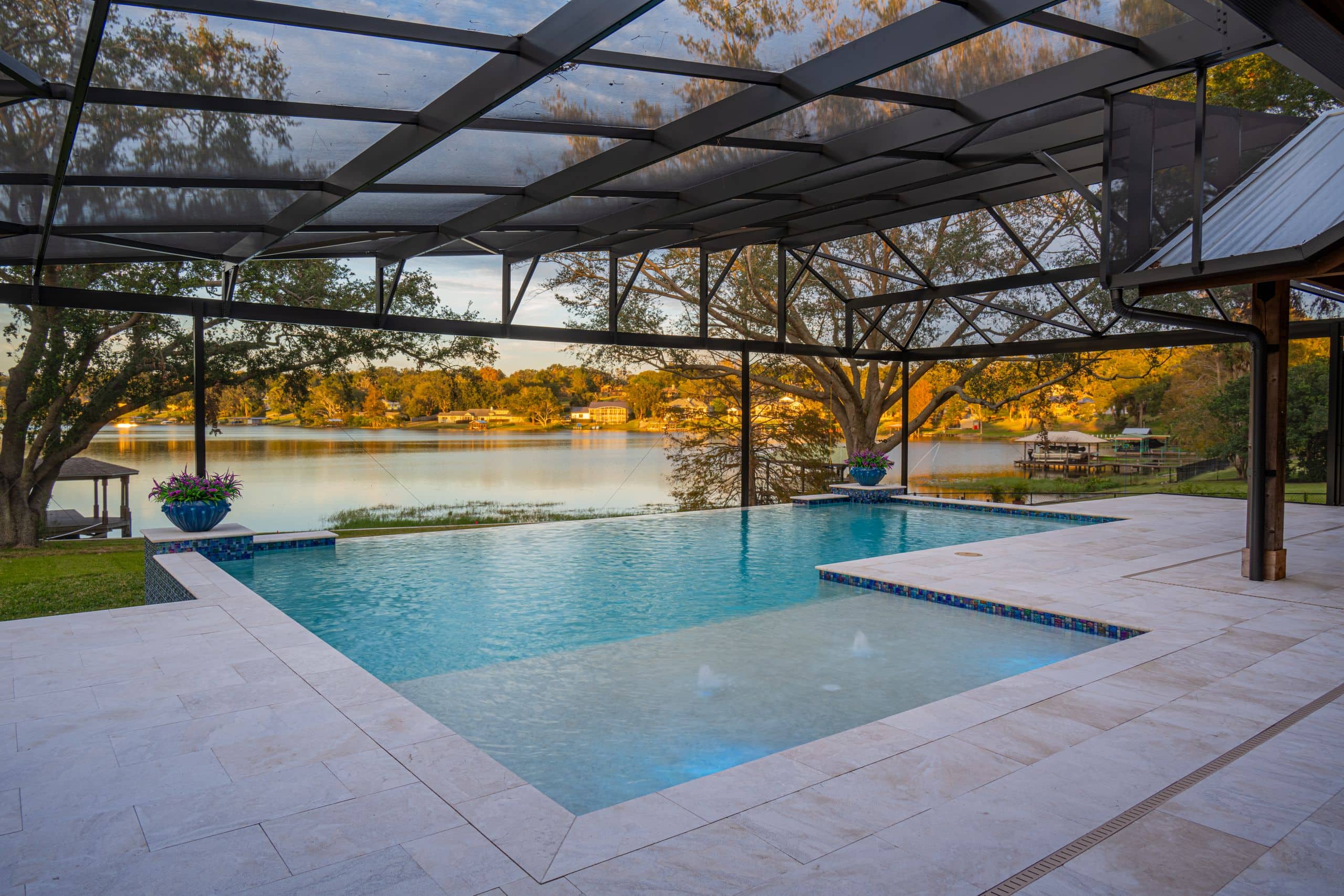
A screen enclosure that meets the barrier requirements can serve as part or all of the barrier, which is one reason enclosed lanais are so common in Central Florida. We cover sizing and pricing in what a pool screen enclosure costs in Florida.
Removable mesh barriers are allowed when they meet the same rules and one end can only be removed with tools. A safety pool cover listed to ASTM F1346 is a recognized exception to the barrier, though most of our clients prefer a permanent solution they never have to think about.
When It Gets Inspected
The barrier is inspected before the pool is filled with water, along with the final electrical inspection. Many counties also ask the contractor to sign a pool safety affirmation at permit, choosing which method the pool will use. For the full permit sequence, see our guide to residential pool permits in Central Florida.
Choosing between options? Compare them in screen enclosure, fence or mesh and pool door alarms, self-closing doors or a pool alarm.
How We Design for It
We pick the barrier method during design, not at permit. That decision shapes the yard: screen enclosure or open view, which doors get alarms, where the gate lands, and where the equipment pad sits so it never becomes a climbing step. When a design ignores this, the fix shows up late as a fence through the middle of the view or a change order nobody planned for.
Every pool from our Design Studio includes the barrier plan in the design book and in the fixed construction price. If you want to see it for your own yard, book a complimentary Site Assessment.
Local jurisdictions can add their own requirements. Southern Pool Designs confirms the barrier method with the building department on every permit. This article is general information, not legal advice. Sources: Florida Statutes 515.29, Florida Statutes 515.27, Florida Building Code, Residential, Chapter 45.
Frequently Asked Questions
At what depth does a Florida pool need a barrier?
Florida’s pool rules apply to any residential pool that holds water more than 24 inches deep. That includes inground pools, aboveground pools and many spas.
How tall does a pool fence have to be in Florida?
At least 4 feet, measured on the outside of the barrier, with no gaps or footholds a young child could use to get through or over it.
Can a screen enclosure count as my pool barrier?
Yes. Florida’s building code allows a screen enclosure that meets the barrier requirements to serve as part or all of the barrier.
Do I need door alarms if I have a pool fence?
If the back of your house forms one side of the barrier, every door that opens to the pool area needs a protected option, such as a listed door alarm or a self-closing, self-latching door with the release at least 54 inches high, or the pool can use a certified pool alarm.
When is the pool barrier inspected?
Before the pool is filled with water. The barrier inspection and final electrical inspection come first, and the pool cannot get its final approval without meeting the safety law.